Documentary

Storm on the Stage is the story of an extraordinary challenge against time. With exactly three days to teach two highly demanding Turkish choreographies to American students, I faced a task that seemed almost impossible. Every rehearsal became a race against the clock—pushing through exhaustion, pressure, and doubt. This documentary captures the journey of transforming unfamiliar steps into a shared language, individual effort into unity, and a heartbeat into a performance. In just three days, the challenge was not simply to teach choreography, but to bring an entire group together and prepare them for the moment they would step onto the stage.

COMBAT MIRROR follows a groundbreaking brain-health research program - the Pearce study, currently in academic submission - built around one urgent question: can combat sports be made safer for the young fighters taking them up. With access to the researchers behind it, the coaches implementing it, and the fighters volunteering as its first subjects, the film tracks how early screening and defensive-technique reform could reduce the neurological toll of boxing and MMA before it starts. Made with the support of the Concussion Legacy Foundation, COMBAT MIRROR moves between the lab and the gym to argue that protecting a fighter's brain and protecting the sport are the same fight.

A Documentary Musical About the Warren Court and the Constitutional Revolution
Hamilton meets Ken Burns in this groundbreaking documentary musical that brings the landmark cases of the Warren Court to life through original music, historical storytelling, and innovative AI technology—including AI-generated voices, music, and lip-synching that allow real historical figures to “sing” their stories.

In the closure of the city’s last video rental stores, this short documentary finds its starting point to reflect on urban gentrification and the changing habits of consumption. Through disappearing spaces and the people who once inhabited them, the film connects the loss of these places with the transformation of the audiovisual medium and the arrival of artificial intelligence, used as a metaphor for an unstoppable technological change that redefines the way we live, consume, and relate to culture, leaving open the question of what is lost along the way.


In 1983, film student Rich Murray was handed $20,000 in a brown paper bag by a hustler named 'Butch.' These were the funds he used to direct his first music video for a local Philly rocker named Alan Mann. That video for the song “Christmas on the Block”, went on to become the first and perhaps only video by an unsigned artist to play on regular rotation on MTV. Using “Christmas on the Block” as a framing device, Murray illuminates Mann’s larger story - and how he could have, should of and almost did make it, but didn’t because of his excesses, and a tragic accidental death. The film also turns the lens sharply on the film’s director (Murray) and how his own excesses might have resulted in the same tragic trajectory, that but for wisdom and luck, did not.

When a catastrophic stroke destroys the creative half of his brain days before his international breakthrough, a celebrated rebellious Russian performer wakes paralyzed - unable to walk, speak, swallow, or sing. Filmed over several years, WILL POWER follows his fragile and nonlinear rehabilitation as fame fades and his family turns away. What begins as a medical recovery becomes something deeper: a dramatic confrontation with identity, limitation, and choice. Challenging the certainty of prognosis, the film explores the possibility that the boundaries defined by science are not always the limits of human will.
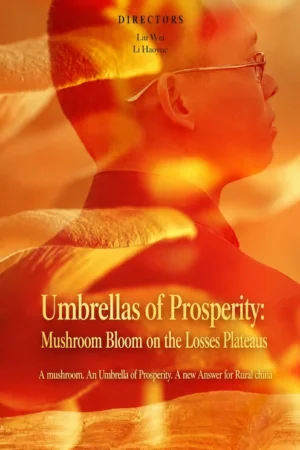
How can a single mushroom become an umbrella of shared prosperity on the Loess Plateau? Umbrellas of Prosperity: Mushroom Bloom on the Loess Plateau follows agricultural scientist Huang Chao, whose lifelong dedication to the Loess Plateau has transformed mushroom cultivation through scientific innovation. The film documents his team’s breakthroughs in converting agricultural waste into valuable growing substrates, developing new mushroom varieties, and transferring technology to local farmers. Their work has revitalized abandoned cave dwellings into productive mushroom farms, turning a humble mushroom into a powerful driver of rural revitalization. More than a documentary about agricultural science, this is a story of perseverance, innovation, and the pursuit of shared prosperity.
See how you get find your past, present and future life in a 3000 year old Naddi leaf
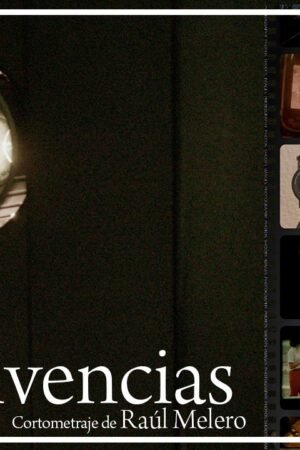
Pervivencias is a creative documentary that, through the found footage technique, aims to reflect on the power of images to contain and reproduce moments from our own lives and, in a way, bring them back to the present. To achieve this, materials from various audiovisual formats (Super 8, home video, slides, etc.) have been used, as well as equipment to reproduce these formats. Therefore, this documentary also seeks to highlight the gap that the disappearance of these devices, which allow us to access these images, can create with our immediate past, and the need to preserve these materials, which offer us a fairly clear vision of the daily lives of anonymous people not so long ago. Because of this theme and the factors through which it is expressed, the themes of love and death also underlie Pervivencias.
A Paraguayan filmmaker recovers the film made by a Frenchman in rural Paraguay in 1968, the one that had moved him in his adolescence, during Stroessner’s dictatorship. He embarks on an odyssey through France, Argentina and Paraguay with the intention to reunite the Frenchman with the Paraguayan peasant family, building a film of questions and searches, about the absent and the present, about the adventure of life and the mystery of cinema. Years later, the long dreamed of reunion takes place on a luminous day under the bright sun, as a love story about humanity and the power cinema exerts on the personal and the collective memory.

On the coast of her native Cantabria, where the sound of the sea permeates everything, lives Elena. She is married to the love of her life: a kind and attentive man, a sailor by profession, who works aboard a fishing boat. They have a daughter, Alba, nine years old, who is their greatest joy and the center of their lives. The boat on which her husband sails has been gone for several days without returning to port, and the lack of news fills Elena with growing anxiety. At last, Elena’s happy world is shattered before her eyes in a single instant. She feels that life has lost its meaning, and grief drags her into despair, leading her to renounce even her deepest beliefs. As she recalls those happy moments, now lost forever, only her love for little Alba anchors her to the present and gives her the strength to overcome her pain and hold on to life once more. Between the harshness of reality and the tenderness of imagination, mother and daughter find a way to move forward, learning to live with loss. In that delicate balance between pain and love, the sea becomes the witness to an intim


This is an oil-centrist documentary made as an Essay Film and using historical archives from Iran and the world. In this film, themes such as the discovery of oil in Iran, oil extraction and the impact of these events on Iran's governmental, political and cultural changes have been examined. In addition, the interventions and political games of foreign governments have also been discussed. The film is an archival feature documentary composed entirely of authentic footage up to 1979 and movements of recent years, exploring the complex relationship between Iran and oil, human rights, War, Women's personal and social lives and their problems and struggles, the shifts in political power, and the influence of foreign governments in shaping the country's destiny.

Brothers Mic & Jim Conway have been playing music since school days, when they started the Jellybean Jug Band together, which subsequently morphed into the Captain Matchbox Whoopee Band. In the early 1970s Captain Matchbox were a tearaway success with old 1920s/30s tunes such as My Canary Has Circles Under His Eyes and comical tunes of their own, like Wangaratta Wahine. Mic loves visual entertainment and vaudeville, and creating instruments out of anything to hand. He has been in countless band line-ups over the last 40 years, and they all demonstrate his unique vision of performance, circus and vaudeville. Jim on the other hand is a natural musician and a blues one at that. He found his instrument early on in Captain Matchbox with the harmonica, proceeding to become one of Australia’s foremost blues harp players. As has been said of them, the brothers make sibling rivalry an art form, but they are also very close. At the age of 30 Jim was diagnosed with multiple sclerosis (MS), and this has gradually progressed over the last 40 years to the point where Jim is now virtually quadriplegic and can no longer play harmonica. Jim is married and Mic has his own family, but they have remained side by side through the years.

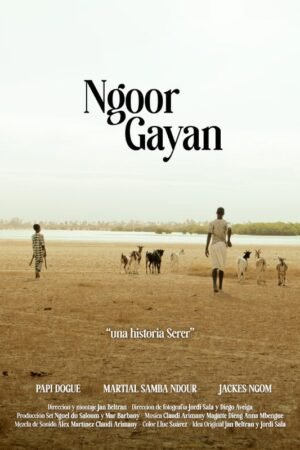
Two friends flee dull Barcelona for a Senegalese village. A local tale inspires them to abandon their emigration doc for an unexpected project.
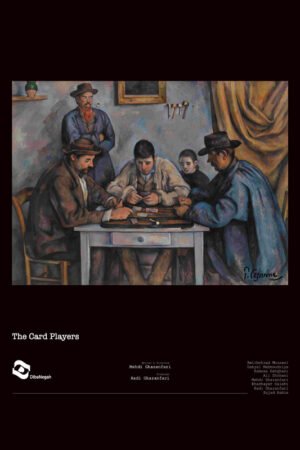
The film The Card Players is a free adaptation of the series of works by the French painter Paul Cézanne, bearing the same name. It consists of four episodes—Venus, Grafting the Vine, Grapes, and Bitter Wine—each with a different story.
In the episode Venus, symbolized by Diamonds, the main character has a deep connection with objects. Therefore, this episode places greater emphasis on objects. The main character is inspired by the standing café owner in Paul Cézanne’s painting The Card Players.
The episode Grafting the Vine, symbolized by Clubs, tells the story of a painter who portrays a woman in a garden. This episode emphasizes plants, and the main character is inspired by the figure on the right in Paul Cézanne’s painting The Card Players.
In the episode Grapes, symbolized by Spades, we see a young man living with several cats. The focus of this episode is on animals. The young man intends to make a change in his life of crime—not by abandoning it, but by committing crimes independently. This episode is inspired by the man on the left in Paul Cézanne’s painting The Card Players.
In the episode Bitter Wine, which follows Grafting the Vine and Grapes, we witness the brief companionship of two strangers. One is a man, an art dealer specializing in unknown painters, and the other is a woman, who previously appeared as a model in Grafting the Vine. The female character is inspired by the woman behind the two card players in Paul Cézanne’s painting The Card Players.
Symbolized by Hearts, this episode draws inspiration from the central figure in the painting. The two characters become travel companions for less than an hour.