
Latin Films

Indifference. Can we continue to remain indifferent to others? To all those who have strayed from the path and whom our indifference renders invisible.

In the closure of the city’s last video rental stores, this short documentary finds its starting point to reflect on urban gentrification and the changing habits of consumption. Through disappearing spaces and the people who once inhabited them, the film connects the loss of these places with the transformation of the audiovisual medium and the arrival of artificial intelligence, used as a metaphor for an unstoppable technological change that redefines the way we live, consume, and relate to culture, leaving open the question of what is lost along the way.

This film blends reality and fiction to offer a unique perspective on the possible whereabouts of Federico García Lorca's remains and what would happen if they were unexpectedly discovered ninety years after his assassination. Part of the story draws inspiration from real events that shaped its protagonists, while the other part springs from the author's imagination, who incorporates creative elements to enrich the narrative and explore emotions and possibilities beyond the documented facts. The result is a work that mixes truth and fantasy in a captivating balance. But the question remains: could it not be true? Judge for yourselves.


At the end of the 19th century, the Italian Juan Bautista Busca arrived in Zumarraga (Basque Country), along with other Italians, Swiss, and Austrians, to work on the Madrid-Paris railway tunnels. They not only brought their work experience in the construction of Alpine tunnels, but also small diatonic accordions with which they entertained their free time in the barracks where they were housed. Busca was one of them, but he didn't leave after the construction work was completed. He married and settled in Zumarraga, where he started a family, whose descendants still live in the municipality. He planted the seed for a foreign instrument, the accordion, to blend with the ancestral sound of the area's traditional tambourines, giving rise to what we know today as Trikitixa, one of the most representative hallmarks of Basque musical culture. A unique story that represents the enrichment that the arrival of people with different social, cultural, and linguistic backgrounds brings to any culture. The Trikitixa is a recognized Basque musical hallmark both within and outside of Euskal Herria, and curiously, that small accordion came from abroad, and not so long ago. The documentary features more than 20 testimonies, in Basque and Spanish, from important figures in Basque culture, including Bernardo Atxaga, Toti Martínez de Lezea, Kepa Junkera, Fermin Muguruza, Garikoitz Mendizabal, and, of course, members of the still-active Trikitixa de Zumarraga. The documentary features abundant and interesting, rarely seen archival footage, the result of intensive research.

NO-W-AR is a short visual work that explores the universal human consequences of war through symbolic imagery. Free from references to specific conflicts, nations, or eras, the film offers an emotional and timeless reflection on loss, destruction, and silence

Days before her Adlib Ibiza fashion debut, Diana's world is rocked when her hands begin to tremble, rendering her unable to embroider her masterpiece. As she navigates the challenges this brings to her marriage and her own sense of self, Diana embarks on a journey of resilience and self-discovery, determined to redefine her aspirations in the face of unexpected adversity.

Pervivencias is a creative documentary that, through the found footage technique, aims to reflect on the power of images to contain and reproduce moments from our own lives and, in a way, bring them back to the present. To achieve this, materials from various audiovisual formats (Super 8, home video, slides, etc.) have been used, as well as equipment to reproduce these formats. Therefore, this documentary also seeks to highlight the gap that the disappearance of these devices, which allow us to access these images, can create with our immediate past, and the need to preserve these materials, which offer us a fairly clear vision of the daily lives of anonymous people not so long ago. Because of this theme and the factors through which it is expressed, the themes of love and death also underlie Pervivencias.


Carmen is a 40 year old woman. Her mother, whom she never had a great relationship with has passed away, but now, through taking care of the home in which she grew up in, she puts herself in her mother’s shoes and finally manages to understand.
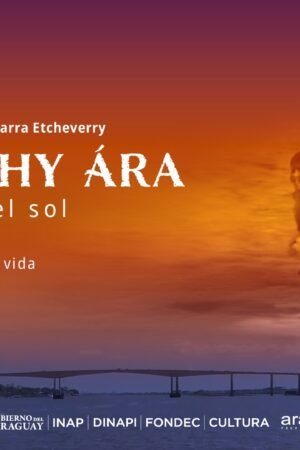
A Paraguayan filmmaker recovers the film made by a Frenchman in rural Paraguay in 1968, the one that had moved him in his adolescence, during Stroessner’s dictatorship. He embarks on an odyssey through France, Argentina and Paraguay with the intention to reunite the Frenchman with the Paraguayan peasant family, building a film of questions and searches, about the absent and the present, about the adventure of life and the mystery of cinema. Years later, the long dreamed of reunion takes place on a luminous day under the bright sun, as a love story about humanity and the power cinema exerts on the personal and the collective memory.

Carmen demands a little more attention from her husband, Ibón, but his work monopolizes her time so that they can barely meet together. Oscar, their son, tries to get his parents to listen to him, but they are always “on their own business”. Furthermore, Óscar has problems at school that he doesn't know how to solve, because he can't wait to tell them at home. He also demands more attention. One day Carmen discovers that Ibón has more reasons, not just work reasons, for seeing them so little. After confirming his suspicions, he decides to take drastic measures. Oscar now becomes the epicenter of his parents, who use him as a bargaining chip between their interests, but continue not to pay attention to the little one's demands. By the time they realize it, it will be too late. Until then, everyone will have done their own thing. Now, there is nothing to do.

On the coast of her native Cantabria, where the sound of the sea permeates everything, lives Elena. She is married to the love of her life: a kind and attentive man, a sailor by profession, who works aboard a fishing boat. They have a daughter, Alba, nine years old, who is their greatest joy and the center of their lives. The boat on which her husband sails has been gone for several days without returning to port, and the lack of news fills Elena with growing anxiety. At last, Elena’s happy world is shattered before her eyes in a single instant. She feels that life has lost its meaning, and grief drags her into despair, leading her to renounce even her deepest beliefs. As she recalls those happy moments, now lost forever, only her love for little Alba anchors her to the present and gives her the strength to overcome her pain and hold on to life once more. Between the harshness of reality and the tenderness of imagination, mother and daughter find a way to move forward, learning to live with loss. In that delicate balance between pain and love, the sea becomes the witness to an intim
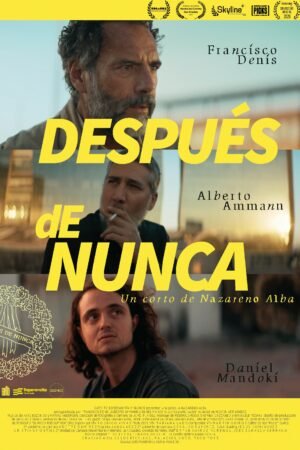
During a wake, three men —a Mexican, a Venezuelan, and an Argentine— accidentally become trapped on the rooftop of a funeral home. What begins as an absurd and uncomfortable wait gradually transforms, as night falls, into an intimate confrontation with the dead man who connects them and with everything he left unresolved within them. Separated from the ritual unfolding below, the three men move from courtesy to confession, and from discomfort to a shared truth none of them knew. After Never is an intimate, performance-driven drama about grief, memory, guilt, and the fragile possibility of change.

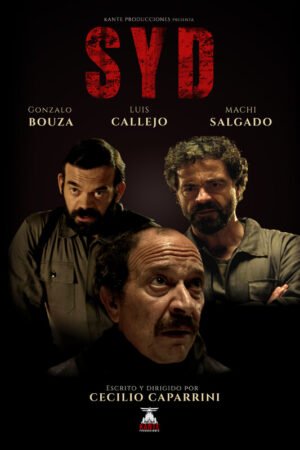

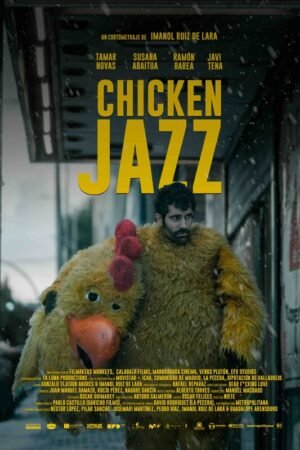
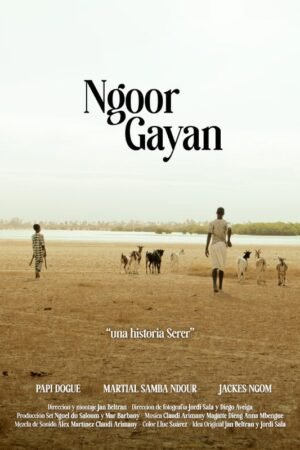
Two friends flee dull Barcelona for a Senegalese village. A local tale inspires them to abandon their emigration doc for an unexpected project.


PLAY MOVIE (please click here)
David, a depressed teenager, writes the ‘Suicide Catalog’. His alarmed teachers must confront the possibility that he intends to take his own life
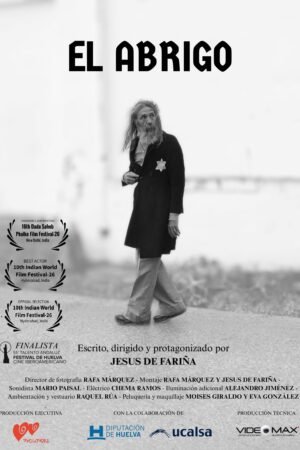
El abrigo (The Coat) shows what the Shoah first day (Final Solution) might have been like during World War II in an unspecified village in Nazi-occupied Central Eu vagrant goes about his miserable existence one morning. In his haphazard journey to avoid a tragic fate (in the face of the new threat that lurks), he encounters a wandering gypsy clan, who take him in and offer shelter reminding that even in times of terror, humanity and solidarity can persist. With irony, identity and survival in a world of violence and reversed roles, thanks to a chain of coincidences aggravated by the unconscious theft of a coat with a David (actually found), the protagonist is mistaken for a Jew without being one, his fate being the last line between life and death in a world marked by genocide. The story takes place in a single day with moments of drama and tension, leaving a hopeful message: even a seemingly insignificant man can become a saviour for man that kindness can arise in the most unexpected places and from those least expected.
In the closure of the city’s last video rental stores, this short documentary finds its starting point to reflect on urban gentrification and the changing habits of consumption. Through disappearing spaces and the people who once inhabited them, the film connects the loss of these places with the transformation of the audiovisual medium and the arrival of artificial intelligence, used as a metaphor for an unstoppable technological change that redefines the way we live, consume, and relate to culture, leaving open the question of what is lost along the way.