
Come back
PLAY MOVIE (please click here)
Haunted by a collapsing relationship, a young man journeys through a dreamlike subconscious landscape where a Snow Woman consumes his memories, forcing him to choose between erasing the pain of love or returning to reality and confronting the emotions he has tried to escape.
You Also May Like
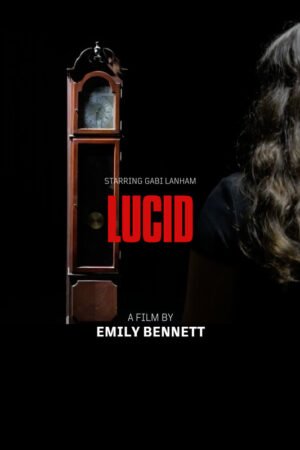
The intention of LUCID was to explore the proliferation of digital media that has cultivated an era where the lines between reality and fiction are increasingly blurred. Though we turn to social media to connect, it ultimately estranges us from ourselves and others and to reality itself. The purpose of LUCID is to allegorically represent this disconnect through the medium of lucid dreaming in order to expose the disintegration of the authentic self within a hypermediated world. My film would be suited to audiences who have a suspicion that the contours of existence extend beyond the dimensions of an iPhone screen, who are painfully aware that we are, in the words of Postman, “amusing ourselves to death.”




PLAY MOVIE (please click here)
David, a depressed teenager, writes the ‘Suicide Catalog’. His alarmed teachers must confront the possibility that he intends to take his own life

Set inside a brutalist museum after hours, three teenagers attempt a high-risk heist. Rendered in stark black-and-white noir, the film reframes theft not as crime, but as confrontation — a collision between institutional value and personal meaning. What makes something valuable? Scarcity? Protection? Naming? Or the simple act of deciding it matters? As walls protect what is deemed “priceless,” the film explores how value is constructed, who controls it, and how ownership reshapes belonging. In the dark, value becomes unstable. And sometimes what seems small holds everything that was missing.
Fun Facts of Movie
Directed by Wilson Ye. 12min 59sec
Wilson Ye is a filmmaker and visual storyteller who explores cinema as a hybrid artistic medium, blending film with painting, animation, and collage to create visually expressive narratives. His work moves between reality and imagination, often following characters who enter fantastical worlds to confront inner conflict, identity, and emotional transformation. Through layered visual language, he seeks to push the boundaries of cinematic storytelling and reveal the psychological depth of human experience.
Shaped by living across different cities, countries, and languages, Wilson’s artistic voice is rooted in a personal search for belonging. Experiencing life as an outsider in various cultural environments, he is drawn to stories about identity, alienation, and connection. His films explore what is shared and what differs among people, examining how culture, environment, and imagination shape the inner world and the universes we create.
Director Statement
COME BACK began from a simple but uncomfortable question: what if memory is not something we lose, but something that is actively rewritten—by emotion, by desire, or by the mind’s own survival system?
I was not interested in building a traditional narrative about relationships or loss. Instead, I wanted to construct a psychological space where memory behaves like a physical environment—something that can be entered, corrupted, and replaced. In this film, identity is not stable. It is procedural. It updates itself.
The film follows Victor as he moves through shifting layers of memory, but the structure is intentionally unstable. Characters appear as functions rather than fixed identities. Alter Ego, Snow Woman, and Gabby are not simply individuals within a story—they are competing forces inside the same consciousness, each trying to define what the past should mean. I wanted the audience to experience this instability rather than observe it from a distance.
Formally, I approached the film as a collapse between dream logic and system logic. White space, void environments, and sudden transitions are not symbolic decoration—they are the operating language of the world. The visual design is intentionally minimal because memory, when it breaks down, does not erase detail first; it erases certainty.
The “Snow Woman” is not written as a character of good or evil, but as a mechanism of replacement. She represents the way emotional rewriting can feel both comforting and violent at the same time. What is unsettling is not her presence, but how easily she takes the place of what came before.
I was also interested in the idea that even internal voices—such as Alter Ego—cannot be trusted as stable guides. The subconscious is not a single authority; it is a negotiation between conflicting survival strategies. In that sense, the film is less about “finding truth” and more about questioning whether truth remains intact once it is remembered.
At its core, COME BACK is about the instability of attachment. It asks whether letting go is an act of healing, or an act of erasure that we only later learn to accept.
I made this film to explore cinema as a space where psychology can be spatialized—where thought, memory, and emotion are no longer represented through dialogue alone, but through environments that behave like the mind itself.



There are no reviews yet.