
Heirloom (SCRIPT)
Due to copyright protection we are unable to reveal the script online. Anyone interested to read the script may have to contact the writer directly and ask for permission to read it or get a copy of the script. Thank you for your understanding.
Heirloom is a multi‑generational ensemble drama rooted in legacy, secrecy, and the quiet violence of familial control. The story unfolds across two interwoven timelines: beginning in the 1860s Caribbean, moving through 20th‑century England, and ultimately converging in the present day.
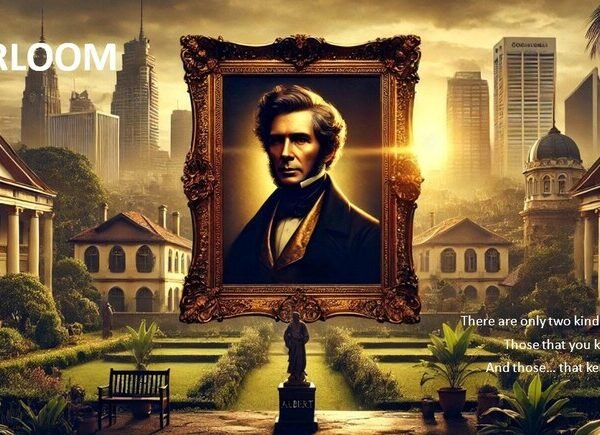
It traces the rise of the Watson family — plantation owners whose wealth, silence, and emotional repression become the foundation of a legacy that quietly shapes and governed the prosperous English market town of Cobblebridge.
The opening narrative begins in 1865 Jamaica, on a sugar plantation owned by Jonathan Watson. Privilege and decadence abound. After a fever outbreak takes the lives of his wife and daughters, Jonathan’s surviving son, seven‑year‑old Albert, grows up holding his father responsible - eventually confronting him and soon after flees to England. Years later, upon Jonathan’s death, solicitors track down an impoverished Albert, who unexpectedly inherits a vast fortune.
The story follows Albert through 20th‑century England as he establishes himself and his young family in Cobblebridge, founding businesses including the Rolling Meadows Golf Club and a community theatre through the Watson Foundation.
This timeline is marked by profound loss: the death of his wife, Eva, the death of his son, Christian, in World War II, and the suicide of his other son, Harry, whom Albert disownes for being gay.
In old age, a bitter and controlling Albert coerces his housekeeper into bearing him an heir (Maureen) and then murders her, angered at being given an heiress.
Before Albert’s death — brought about by Maureen having uncovered the truth about his part in her mother’s murder — he has raped his teenage daughter, Maureen, an act that resulted in the birth of his son, Charles.
Contemporary Timeline — Cobblebridge, 2018 The present‑day plot centres on the Cobblebridge and Communities Amateur Opera and Musical Theatre Society, an organisation quietly sustained by the Watson Foundation. The contemporary conflict is sparked by the society’s controversial decision to stage Show Boat — a choice secretly engineered by the retiring musical director, Gerry, and the chairman, Richard, who, driven by their frustration with the status quo, rig the ballot selecting the society's next production and force it through.
Their whispered pact is overheard by a stagehand, Jimmy, creating a source of blackmail that threatens to unravel the society from within. The proposed production draws a more diverse group from the community into an exclusive membership and also into conflict, exploring subplots including: a new musical director whose reliance on medication has tipped into addiction, an ex-con stagehand on probation and in hiding from retribution from a deal gone wrong, a couple navigating infertility while being harassed by a vengeful antagonist, and a single mother and her son confronting their hidden history and racial identity.
Meanwhile, as the rehearsal process proceeds it is being covertly sabotaged, with the ultimate aim of preventing the show from ever reaching the stage — its cancellation triggering a little‑known covenant condemning the theatre for demolition and returning the land it occupies to its ancestral owners: the Watsons.
But time is running out. Before the curtain comes on the opening night, one final heinous will take place insuring their inheritance — an act for which the Watsons’ blood‑stained past has long prepared them for.
Structure and Thematic Spine The narrative uses a non‑linear, interwoven structure, shifting between the historical past and the 2018 present to reveal how the Watson family’s secrets and injustices directly fuel the contemporary storyline.
The structure makes clear that the colonial wealth generated on the 19th‑century sugar plantation is the financial engine behind the modern‑day theatre and community institutions.
More importantly, the historical timeline exposes the traumatic origins of the primary antagonists, Maureen and Charles, whose actions in the present are shaped — and warped — by their violent inheritance.
By weaving these periods together, the story creates dramatic irony and escalating suspense, demonstrating that the past is not merely backstory but an active, destructive force in the present.
You Also May Like

<p>Due to copyright protection we are unable to reveal the script online. Anyone interested to read the script may have to contact the writer directly and ask for permission to read it or a copy of the script.</p>
When a fertility-control experiment mutates kangaroos into bloodthirsty predators, four backpackers on an outback road trip are thrust into a brutal fight for survival. Hunted across the plains by a hyper-intelligent alpha known as Red Jack, they must outwit the land’s most iconic animal—or become the first victims of a plague capable of overrunning Australia.

Due to copyright protection we are unable to reveal the script online. Anyone interested to read the script may have to contact the writer directly and ask for permission or a copy of the script. Thank you for your understanding.
Professor Wes Craven and third years UCLA film student Jon Carpenter are caught up in a slashers desire to bring back Alfred Hitchcock from the depth of hell.

Due to copyright protection we are unable to reveal the script online. Anyone interested to read the script may have to contact the writer directly and ask for permission to read it or get a copy of the script. Thank you for your understanding.

Due to copyright protection we are unable to reveal the script online. Anyone interested to read the script may have to contact the writer directly and ask for permission to read it or get a copy of the script. Thank you for your understanding.
Marko: Dog of War is a gripping and emotionally charged story that follows the harrowing journey of three Ukrainian siblings as they navigate the dangers of a country torn by conflict. With unique perspective s on the impact of war on children and the unbreakable bonds of family, this screenplay offers a fresh take on the war drama genre. The story centers around three siblings: Andriy, the protective older brother; Daryna, the resourceful middle sister; and Katryna, the youngest.

Due to copyright protection we are unable to reveal the script online. Anyone interested to read the script may have to contact the writer directly and ask for permission to read it or get a copy of the script. Thank you for your understanding.
A nineteen-year-old boy is arrested on charges of killing his father. His mother, who divorced the father long ago, comes to visit him. Crying, the boy tells her that he did not kill his father. The mother promises to find him the best lawyer. Yet, faced with the evidence, the boy is ultimately sentenced to death. In the days while the boy waits for his final day, a long-buried past quietly begins to surface. The real killer and the mother's secret are revealed one by one...
Due to copyright protection we are unable to reveal the script online. Anyone interested to read the script may have to contact the writer directly and ask for permission to read it or get a copy of the script. Thank you for your understanding.
THE CREW is based on true events, and it is a behind the scenes view aboard a yacht on charter in the Mediterranean Sea.
It's got the key ingredients of a guaranteed successful film - sex, drugs, drama, raw comedy.
Mix that with some hilarious situations with great characters and you have a very entertaining project.
The book is currently receiving 5 star reviews from readers and has an ever growing audience on social media.
The book begins with a brief description of the yacht’s crew and their colorful history.
The book follows the crew’s lives and daily routine aboard a large, state of the art millionaire’s motor yacht.
The gleaming white yacht is hired by a seedy Russian gangster and his entourage.
When you mix unlimited cash, with booze and bikini models you get a recipe for scandal and below deck the crew see it all.
The book takes you on a raw, fast paced, hilarious joyride as the crew work and party around the clock on the charter, visiting the fashionable and hedonistic ports of the Mediterranean.
It is not just a story of the glitzy, awe inspiring millionaire’s yachting industry. It is a story of brotherhood, characters, comradeship, innocence, deviousness, being human and pulling together in the face of adversity.
It’s about finding out what’s important in life through experiencing it, finding love and friendship and above all humor.
Fun Facts of Movie
Written by Phillip Edwards 76 pages
I’m a London-based writer with a BA in English and an MA in Playwriting Studies. I trained professionally for four years at a leading performing arts school and was previously signed and managed by ICM. I have worked with some of the Uk’s leading theatres (Soho, Pleasance and Assemble Rooms). I have written two professionally produced stage plays both receiving critical acclaim and awards. I’m drawn to ensemble structures, moral ambiguity, and the slow unearthing of truths long buried. My work is rooted in an interest in legacy, silence, and the private negotiations families make with their own flawed histories.
Writer Statement
Heirloom unfolds through multiple lens – similar to to tv series and films such as This is Us, Magnolia and Chinatown—a tapestry of fractured lives gradually converging under the weight of buried family truths. At its center stands a formidable matriarch, orchestrating legacy with quiet ferocity. Her need to shape the future becomes a slow, deliberate undoing, as the ensemble—each marked by personal fault lines—gravitates toward revelation, reckoning, and ruin.



There are no reviews yet.