
Silence - The Witchdoctor and the Windmill (AU, NSW)
Directed by Robert Hamilton. 57min 47sec. Nominee for Best Score
Robert Hamilton is a retired academic who specialised in the history of the late colonial Australian frontier, Austral-Asian history, Education, First Nations art and representation in film and art, and Reconciliation. He has worked or been an academic visitor at The University of Sydney, Western Sydney University, University of New England, The Rijksuniversiteit de Leiden, KITLV Leiden, Michigan State University, Menzies Centre for Australian Studies London, and Nanyang Technological University Singapore. This is his first film.
Director Statement
My interest in Australian First Nations Art and the history of the first and second generation Western Desert artists began during a visit to Canberra decades ago. I saw a work of Linda’s in a gallery and over several days I returned to it as it had a pull which I’d never experienced before. After researching Linda’s life story I spent two years finding her.
On a whim and what I thought was a fool’s errand I decided to make a documentary film about her. I flew to Alice Springs and we met at an art shed where the better known artists fetch up for painting season to make money in winter. She was well known for not giving interviews so I literally had my heart in my mouth as I walked over to her and sat down.
We looked at each other for what seemed like an eternity. Then she stuck her tongue out at me, laughed and called me crazy – Rama Rama – in Pintupi. I laughed. She asked me why I wanted to make a film about her? I had no film making experience and didn’t work in the industry.
I told her I thought she was a national treasure and that the world needed to know about her life story and the stories behind the art before the stories in the Pintupi language were lost. Her stories in language were the stories from the other side of the colonial frontier and are unique oral and visual records of our shared history. They are a part of the national narrative and when she was gone those stories would be lost forever and slip through the cracks of time’s harm.
She hugged me and told me to come back in a month. Linda always let me know where she was and my brother and I visited her many times during a decade of filming. I learned some Pintupi, I ate kangaroo tail, I visited her at Unduppa camp, chewed native tobacco and she and her husband Russel let me in to her world; the childhood memories, the coming in period, secrets which cannot be shared, her feelings about being catapulted to global recognition after winning the Telstra prize, her insistence about her right to paint her father’s Dreaming and the rise and fall of being a Prophet without honour with her own people while European and American collectors and academics were besotted with her.
It was a love story which can only be felt and never be adequately expressed in any language but film. We encountered many problems along the way and there were times that I just wanted to go bush and forget. Having Linda’s granddaughter Lavinia help with the translation and with advice to maintain the wishes of the cultural owners was a tremendous help. I couldn’t give up. I promised Linda I would finish this film and I kept my promise. Does it matter? You decide.
You may also like after: Silence

Xiao Wei, a socially anxious man, uses an app to create an AI double that shares his appearance but has a confident personality, and lets it socialize on his behalf. At first, the double’s success plunges Xiao Wei into virtual gratification. However, the double gradually spirals out of control: it not only develops genuine feelings for Xiao Yu, but also begins to question the very value of Xiao Wei’s existence, and eventually claims to be the more perfect "Xiao Wei". When Xiao Wei tries to expose the double in the real world, he finds that in Xiao Yu’s eyes, he himself has become the stranger.y

A Paraguayan filmmaker recovers the film made by a Frenchman in rural Paraguay in 1968, the one that had moved him in his adolescence, during Stroessner’s dictatorship. He embarks on an odyssey through France, Argentina and Paraguay with the intention to reunite the Frenchman with the Paraguayan peasant family, building a film of questions and searches, about the absent and the present, about the adventure of life and the mystery of cinema. Years later, the long dreamed of reunion takes place on a luminous day under the bright sun, as a love story about humanity and the power cinema exerts on the personal and the collective memory..

At first glance, the life of a lonely middle-aged woman passes smoothly, in household chores, but how much effort and labor she has invested in the apricot orchard, the only source of income on which she can live until next year. And suddenly fallen snow upsets all her plans and hopes for a good harvest. Therefore, in her thoughts there is only one thing “to save the harvest from frost.” Fumigation (creating a smoke screen) of flowers of apricot trees brings results and there is a premonition that everything will be fine...
Spoiled billionaire playboy Oliver Queen is missing and presumed dead when his yacht is lost at sea. He returns five years later a changed man, determined to clean up the city as a hooded vigilante armed with a bow.

Xiao Wei, a socially anxious man, uses an app to create an AI double that shares his appearance but has a confident personality, and lets it socialize on his behalf. At first, the double’s success plunges Xiao Wei into virtual gratification. However, the double gradually spirals out of control: it not only develops genuine feelings for Xiao Yu, but also begins to question the very value of Xiao Wei’s existence, and eventually claims to be the more perfect "Xiao Wei". When Xiao Wei tries to expose the double in the real world, he finds that in Xiao Yu’s eyes, he himself has become the stranger.

Koushaneh is a young female blogger who was arrested for posting a critical message online. After surviving a 72-hour period of captivity, she has spent the last three months recovering from the psychological trauma, separated from her stepmother. In the quiet of her solitude, she finds comfort in the soothing piano pieces played by her brother, who practices in pursuit of a brighter future. But when her stepmother suddenly enters her private sanctuary, everything begins to change...
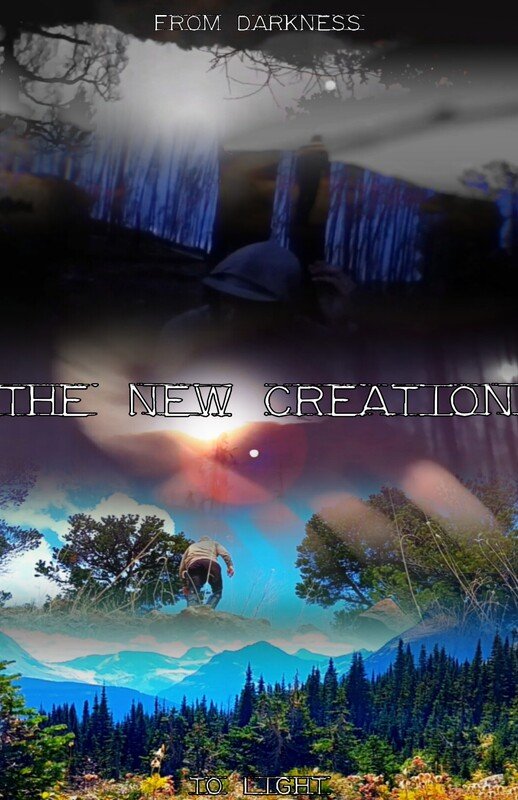
An afflicted soul wanders a wilderness that seems alive with torment—its silence broken only by the whispers of something dark, something ancient. Struggling to distinguish delusion from truth, he’s pulled deeper into a shadowed realm where fear, doubt, and despair close in like fog. As his mind unravels and the world around him bends, fragments of something different—something radiant—begin to break through. A presence. A promise. A choice. The New Creation is a haunting descent into the human soul’s darkest night, and a stirring exploration of the mysterious force that can bring light to even the most forsaken path.

Our apologies the film has been removed as it has not met our terms & conditions of participation, Reason: no screener download link was provided as requested. CIFF Admin
Katerina works in a registry office. She helps seal loving hearts, while her own marriage has been on hold for a long time. Katerina's husband has been in a coma for five years, and the family seems to be stuck with him. A new love brings a major change in Katerina's life, forcing her to make choices that she was previously afraid to make.

On the coast of her native Cantabria, where the sound of the sea permeates everything, lives Elena. She is married to the love of her life: a kind and attentive man, a sailor by profession, who works aboard a fishing boat. They have a daughter, Alba, nine years old, who is their greatest joy and the center of their lives. The boat on which her husband sails has been gone for several days without returning to port, and the lack of news fills Elena with growing anxiety. At last, Elena’s happy world is shattered before her eyes in a single instant. She feels that life has lost its meaning, and grief drags her into despair, leading her to renounce even her deepest beliefs. As she recalls those happy moments, now lost forever, only her love for little Alba anchors her to the present and gives her the strength to overcome her pain and hold on to life once more. Between the harshness of reality and the tenderness of imagination, mother and daughter find a way to move forward, learning to live with loss. In that delicate balance between pain and love, the sea becomes the witness to an intim

Screenwriter Yizhou wrote a story set in Western Sichuan: Photographer Yu Yan travels to Yuzixi to find the mountain god who is said to predict the future. After fainting, he is rescued by Tibetan girl Pema Chodron. As they travel and live together, they gradually develop feelings for each other. Yu Yan discovers that her cowhide diary can foresee their ending. Yu Yan leaves in a fit of anger but returns, and the story repeats itself. Yu Yan and Pema Chodron are both projections of the two sides of Yizhou's inner self.


There are no reviews yet.