
Durning Road (SCRIPT)
Due to copyright protection we are unable to reveal the script online. Anyone interested to read the script may have to contact the writer directly and ask for permission to read it or get a copy of the script. Thank you for your understanding.
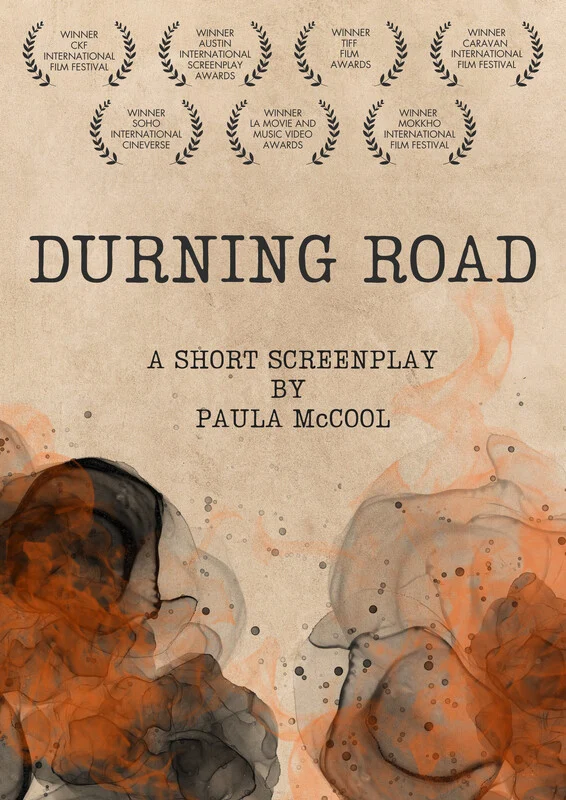
In the pandemonium of a World War II blitz, Frankie, a local soldier on leave, must navigate the bomb-ravaged streets of Liverpool to find his missing two-year-old daughter and save her life. Battling both the dangers of war and paralysing guilt, he races against time in a desperate struggle for survival and redemption.
Fun Facts of Movie
Written by Paula McCool. 13 pages
Paula McCool is a multi-award-winning screenwriter from Liverpool in the United Kingdom.
🏆Current projects:🏆
Paula is currently undertaking a Master’s degree in Writing for Script and Screen at Falmouth University (graduating in 2027), and she enjoys crafting stories that resonate deeply with audiences.
This love of catharsis inspired her latest project, Durning Road; a short war drama narrative screenplay exploring the resilience of the human spirit through character-driven storytelling.
Durning Road has won 21 international awards to date, including Best UK Writer (Soho Cineverse International Film Festival), Best Short Screenplay (Los Angeles Movie & Music Video Awards), Best Script in Short (MIFF Awards), and Best First Time Screenwriter (Short).
💡Career history and goals:💡
After gaining an honours degree in Literature in 1999, she founded a screen industries company negotiating a range of feature film and television contracts, employing actors and acclaimed performers across the globe.
Paula has continually honed her creative writing skills, being a member of numerous writing groups, where she develops her latest ideas.
She is keen to connect with fellow industry professionals and to contribute meaningfully to the filmmaking sector through bold, original screenplays for both feature film and television.
Writer Statement
Durning Road is a historical drama richly layered with emotion. On the surface, it presents as a Second World War short film, channelling tension much like the ever popular Dunkirk or Darkest Hour. Like these, Durning Road is an unflinching portrayal of survival in the face of destruction.
In keeping with many enduring British war films, Durning Road invites contemplation on the resilience of a population under attack. Beneath the chaos and confusion lies a deeply human story that poses a universal question: when the stakes are unbearably high, how would we respond?
Dunkirk is at its most powerful when it reveals the grit of the ordinary ‘everyman’. Similarly, the brilliance of Darkest Hour lies in its depiction of the Blitz spirit, when the resolve of the nation stirs like a lion awakening from slumber. It is from these perspectives that Durning Road may be understood: as a film concerned with the will of the human spirit to adapt and endure when faced with total annihilation.
However, this is where the film diverges. Durning Road introduces a new angle; it’s a war short set not in Dunkirk or Downing Street, but on the streets of working-class Liverpool in 1940. A small neighbourhood. A big story. So big in fact, that’s why the real-life disaster that Durning Road is based on was described by Winston Churchill as ‘The single worst civilian incident of the war’.
In this respect, Durning Road transcends the traditional war film backdrop to merge the immense with the intimate; distilling vast and complex themes of war, loss, grief, and hope into one humble household.
Structurally, the narrative follows soldier-on-leave Frankie, as he navigates his city’s streets under fire from the Luftwaffe. He’s trying to reconnect with the daughter he left behind, amidst a community facing mortal danger. He’s not on duty; he’s at home, and he’s been caught completely off guard. Durning Road raises questions about the spectre of war that haunts us all; are we ever really, truly safe?
This fictionalised retelling of the real-life disaster does not focus solely on the tragedy itself but also explores the human stories surrounding it: the ordinary lives disrupted, the families torn apart. In essence, these are lives that could be lived in any town, in any era; moulded by experiences that resonate with us all.
The tone of Durning Road is vintage in nature, and much like the period drama Call the Midwife, it does not shy away from mixing the harsh with the homely. The style of cinematography should be subtly desaturated, contributing to the sombre mood. The aesthetic will draw influence from 1917, with hand-held cameras used to capture action sequences intimately, creating a realistic feel.
By the end of Durning Road, the reward for the viewer moves beyond a traditional catharsis, instead leaving space for ambiguity; it offers a realistic portrayal of love and hope in the face of abject fear, and a silent acknowledgement that such qualities endure in the darkest of times. It stands as both tribute to those involved, and an enduring reminder of the human spirit’s capacity to persevere.


There are no reviews yet.